 time4cooking.com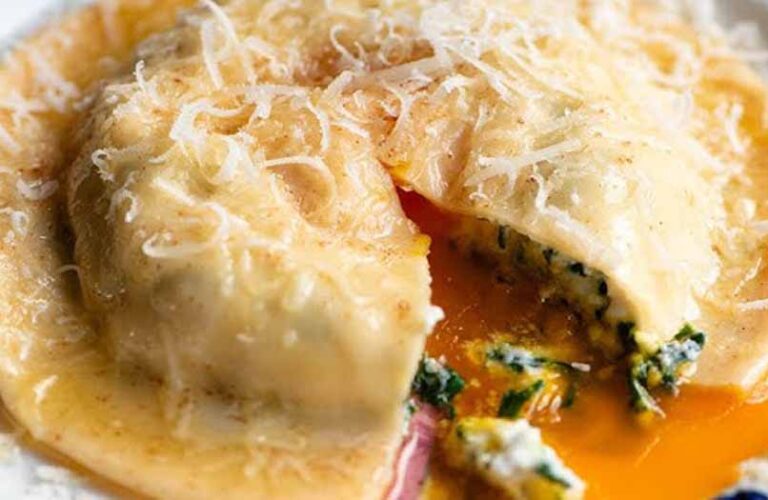
One Perfect Pouch Holds a Runny Egg Yolk Waiting to Burst
Fresh pasta raviolo comes in countless shapes and sizes. But few creations inspire as much awe as the raviolo. Unlike its better-known cousin ravioli, which arrives in multiples, the raviolo stands alone. This single, generous pasta pouch often hides a treasure inside: a rich, golden egg yolk that waits patiently for the diner’s fork to set it free. It represents Italian cooking at its most dramatic and delicious.
Raviolo vs. Ravioli: Understanding the Difference
The distinction between raviolo and ravioli is simple but essential. Ravioli is the plural form of the word, referring to multiple small pasta parcels. A typical serving contains several pieces, each around two to three inches in size. Raviolo, on the other hand, is the singular form. It describes one larger pasta pouch, usually around four to six inches across.
This contrast in dimensions creates an entirely distinct dining experience. One generous raviolo takes centre stage on the plate, immediately capturing focus. Cooks can develop a more complex stuffing that reveals itself gradually with each mouthful. Substantially larger, the proportion of filling to pasta renders every forkful a luxurious and decadent affair.
The Star of the Show: Uova da Raviolo
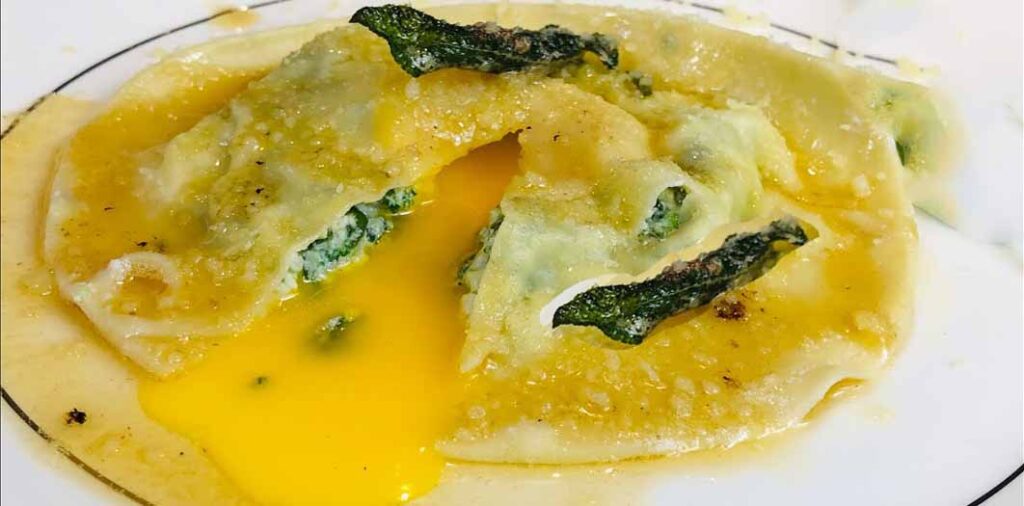
Most renowned version of this dish bears the name Uova da Raviolo, meaning “eggs of raviolo”. The chef arranges a circular mound of ricotta and spinach mixture onto a disk of fresh pasta. Into the hollow centre of this arrangement, they gingerly deposit an uncooked egg yolk. A second layer of pasta closes the package, imprisoning the yolk within its tender casing.
As soon as the raviolo meets the simmering water, culinary alchemy unfolds. Approximately two to three minutes suffice for the pasta to cook through while the ricotta mixture heats completely. Sufficient coagulation of the egg white maintains its structure, yet the yolk remains lusciously liquid. Piercing the raviolo with a fork releases the golden yolk, which combines with the stuffing and whatever dressing adorns the plate to produce an immediate, built-in sauce.
Regional Origins and Traditions
Food historians trace ravioli back to the 14th century in the northern Italian region of Liguria. Raviolo, however, is a more recent innovation. It emerged in the 19th century as a variation on the classic theme, primarily in the Piedmont region. Piedmont’s culinary traditions celebrate richness and indulgence, making it the perfect birthplace for this luxurious dish.
Over time, different regions of Italy have developed their own versions. Campania’s raviolo often takes a round or oval shape. Local ingredients and preferences determine the fillings. Across the peninsula, however, the core concept remains consistent: one perfect pasta pouch generously filled and expertly crafted.
Essential Ingredients for Perfect Raviolo
Creating authentic raviolo requires specific ingredients. “00” flour, the finest grind available, typically forms the base of the pasta dough, producing a silky, tender texture. Eggs provide richness and structure. Some recipes add a touch of olive oil and salt to enhance the dough’s flavour and elasticity.
For the classic Uova da Raviolo, the filling combines fresh sheep’s milk ricotta, grated Parmigiano-Reggiano, and blanched spinach. A pinch of nutmeg adds warmth and depth. Centre stage belongs, of course, to the egg yolk. Chefs stress the importance of using very fresh eggs, as the yolk must remain perfectly intact during assembly and cooking.
Butter and sage provide the classic sauce pairing. Nutty, melted butter complements the rich yolk, while fried sage leaves add an aromatic, herbal note. Some modern versions incorporate truffle shavings for an extra layer of luxury.
How to Cook and Serve Raviolo
Preparing raviolo demands precision and focus. A spacious vessel of salted water must attain a mild simmer, never a vigorous boil. Aggressive bubbling might fracture the fragile pasta or burst the valuable yolk within. Using a broad slotted utensil, the chef carefully eases each raviolo into the liquid.
Cooking time runs short, typically just two to four minutes. Tender pasta should result, but the yolk must remain liquid. When the ravioli float to the surface, they are nearly done. Gentle removal from the water comes via a slotted spoon or spatula.
In a separate pan, the sauce awaits. For the classic preparation, butter melts and sizzles with fresh sage leaves until fragrant. Directly into the pan goes the cooked raviolo, receiving a quick turn in the butter before serving. A final shower of grated Parmigiano-Reggiano and perhaps a few shavings of fresh truffle completes the dish.
Why Raviolo Captivates Chefs and Diners
Several factors contribute to raviolo’s special place in Italian cuisine. First, it showcases technical skill. Assembling the raviolo without breaking the yolk requires a steady hand and careful technique. Second, it creates drama at the table. Diners experience a little piece of theatre the moment the fork cuts through the pasta and the yolk spills out.
Third, it represents the Italian philosophy of letting quality ingredients shine. Fresh pasta, good ricotta, a perfect egg, and fragrant sage — a few excellent components combine to create something far greater than the sum of their parts. Complex sauces or elaborate presentations do not hide this dish. Purity of ingredients and skill of the cook form its foundation.
Making Raviolo at Home
With a bit of practice, home cooks can successfully make raviolo. Fresh pasta dough, made from flour, eggs, and a touch of olive oil, starts the process. Allowing the dough to rest for at least 30 minutes before rolling lets the gluten relax.
Crucially, the dough must roll thin. Achieving the necessary thinness, about one millimetre, becomes easier with a pasta machine. Circles, typically six inches in diameter, are then cut. Half the circles receive a ring of filling with a well pressed into the centre. An egg yolk sits in each well. Another pasta circle goes on top, and the cook seals the edges carefully, pressing out any air pockets.
Brief refrigeration of the assembled ravioli before cooking allows them to rest. Timing matters for serving. Just as the pasta finishes cooking, the sauce should stand ready. Neither raviolo nor the perfect runny yolk waits for anyone.
A Dish for Special Occasions
Everyday food does not include raviolo. Special meals, however, suit its richness and indulgence perfectly. A first course for a dinner party works beautifully, surprising and delighting guests. Alternatively, a luxurious main course for a romantic dinner at home serves equally well.
Appeal also comes from the effort required to make raviolo. Intention and care define this food. Each raviolo represents minutes of careful work, from mixing the dough to sealing the edges. Direct translation of that effort to the plate creates a dish that feels truly special.
The Enduring Appeal of Raviolo
Delivery on multiple levels explains raviolo’s endurance. Visual satisfaction comes from its plump shape and golden yolk. Aromatic satisfaction arrives with the scent of butter, sage, and cheese. Textural satisfaction emerges from tender pasta, creamy filling, and silky yolk. Emotional satisfaction offers comfort and luxury in equal measure.
Innovation with raviolo continues among modern chefs. Different fillings, sauces, and presentations provide endless experimentation. Lobster or crab sometimes joins the ricotta mixture. Sweet versions for dessert fill the pasta with chocolate or fruit. Against all these, the classic Uova da Raviolo remains the benchmark, the version by which all others must measure themselves.
Whether enjoyed in a trattoria in Piedmont or crafted in a home kitchen far from Italy, raviolo delivers a taste of Italian culinary genius. One perfect pouch, one runny yolk, one unforgettable bite.
Fresh Pasta Raviolo Recipe
Ingredients
For the pasta dough
2 medium eggs plus one egg yolk
1.5 cups Italian 00 flour, (200g)
For the filling
1 cup ricotta, (250g) drained
4 cups fresh spinach, (100g/3.5oz)
1 small pinch freshly grated nutmeg
½ cup freshly grated Parmigiano Reggiano, (30g)
Small pinch of salt
olive oil
For the Sauce
Unsalted butter
Parmigiano Reggiano
Instructions
To make the pasta dough
- Tip the flour onto a clean work surface and make a wide well in the middle. Add the two eggs and one egg yolk to the well and beat them with a fork.
- Using the fork continue to beat the eggs whilst incorporating the flour until you have a rough dough.
- Once a rough dough has formed use your hands to knead the dough for about 10 minutes until smooth and elastic. Wrap the dough in plastic wrap (cling film) and let it rest at room temperature for at least 30 minutes.
To make the filling
- Make sure to drain the ricotta from any excess liquid.
- Add a small drizzle of olive oil to a large frying pan and add the spinach. Saute the spinach until just wilted turn off the heat and let it cool.
- Once cooled, squeeze out as much liquid as possible from the spinach and finely chop it. Add it to a mixing bowl with the ricotta, nutmeg, Parmigiano Reggiano and salt. Mix everything together until evenly combined. Transfer the filling mixture to a large piping bag, set aside.
Roll out the dough
- Cut the dough in half and keep one half wrapped in plastic wrap while using the other. Press the dough flat enough to fit into the widest setting of your pasta machine (you can use a rolling pin to help).
- Pass the dough through the widest setting of your pasta machine (usually number 0) then fold one end into the middle of the dough and the other end directly over it as if you were creating a leaflet. Flatten the dough again and pass it through the widest setting once more. Repeat this process another two times.
- Roll the dough through each setting once finishing on number 6. Use your round cutter to make indents along the sheet of pasta so you know where to pipe your filling.
Fill and assemble the ravioli
- Cut the pasta into large squares about 5.5 inches wide (15cm) with one indent in the middle of each. Pipe the filling in a circle about 1cm away from the edge of your raviolo.
- Add an egg yolk to the middle of the filling and sprinkle a small pinch of salt directly on top.
- Place another square of pasta over the top and gently secure the pasta around the filling (you can use a little water to help secure the pasta if needed). Use your round cutter to cut the raviolo making sure the filling is in the centre.
- Lay the filled raviolo on a clean surface dusted with flour or semolina while you make the sauce.
Make the sauce
- Bring a large pot of water to a boil and season it well with salt. Swirl the water and add all four raviolo one by one. Use a slotted spoon to make sure they don’t stick to the bottom of the pot. Cook for 4 minutes.
- Meanwhile, melt butter in a large frying pan. When the raviolo are cooked, remove them with a slotted spoon to the melted butter without adding too much extra water.
- Place the raviolo on plates (one per person) and top with freshly grated Parmigiano Reggiano.
How to freeze
- To freeze the egg yolk ravioli it’s best to blanch them first otherwise the pasta becomes brittle when frozen and can easily crack and break.
RECOMMENDED WINES


Chardonnay (Unoaked or Lightly Oaked)
This stands as the number one recommendation. Its medium to full body matches the dish’s richness, while its bright acidity cuts through the butter and egg yolk. Unoaked versions offer pure apple and citrus notes, while lightly oaked styles add a complementary touch of vanilla and toast.
Sauvignon Blanc (High Acidity)
This option provides a zesty contrast to the creamy dish. Its high acidity and herbal notes echo the sage and spinach, cleansing the palate with every sip. The crisp citrus flavours prevent the meal from feeling too heavy.
Pinot Noir (Light-bodied)
Pinot Noir produces some of the world’s most elegant and sought-after red wines. This thin-skinned grape challenges growers with its finicky nature, yet rewards them with wines of sublime beauty. Pinot Noir offers silky tannins and ethereal perfume. It pairs exquisitely with salmon, duck, mushroom dishes, and roasted poultry.