 time4cooking.com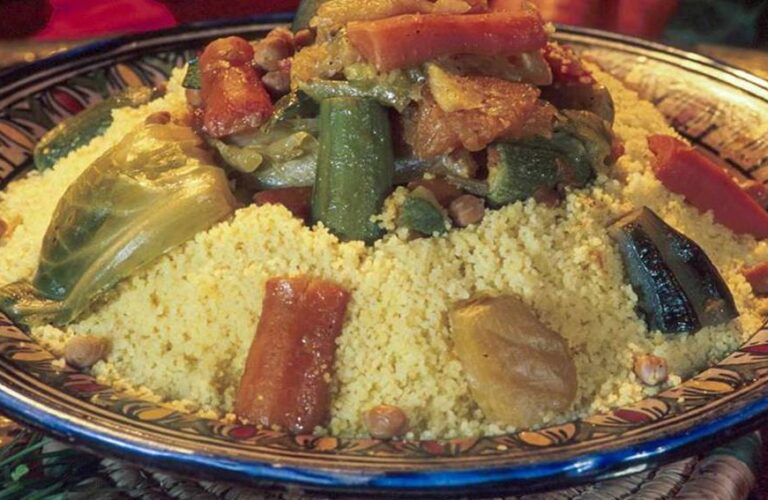
Couscous Moroccan Dish
Couscous is a beloved staple in Moroccan cuisine, deeply ingrained in the country’s culture and daily life. This traditional dish, made from steamed semolina wheat granules, holds a special place in Moroccan households, especially during family gatherings and festive occasions.
Making the Moroccan Couscous
The process of making this delicious dish is labour-intensive but rewarding. Traditionally, semolina wheat is hand-rolled into tiny granules, which are then steamed over a flavourful broth of meat and vegetables. The couscous is fluffed several times during steaming to ensure a light, airy texture. In modern kitchens, pre-steamed couscous is often used to save time, though the art of preparing it from scratch remains cherished.
Often Served as a Base for a Variety of Toppings
This is versatile dish and often served as a base for a variety of toppings, such as lamb, chicken, or beef, accompanied by vegetables like carrots, zucchini, and chickpeas. One of the most famous couscous dishes in Morocco is served with Seven Vegetables—a colourful and nutritious meal symbolizing abundance and hospitality. The vegetables are simmered in a savoury broth seasoned with a rich blend of Moroccan spices such as cumin, cinnamon, turmeric, and saffron, which infuse the dish with depth and warmth.
Moroccans Friday Dish
Fridays are especially associated with this dish in Morocco. After the Friday prayer, families traditionally gather to share a large communal platter of couscous, emphasizing its role in bringing people together. The dish is typically eaten with the hands, fostering a sense of intimacy and connection.
A Symbol of Hospitality, Comfort, and Community
In Moroccan culture, couscous transcends its role as a mere meal. It is a symbol of hospitality, comfort, and community. Its preparation and consumption reflect the values of sharing and tradition that are central to Moroccan life. Whether served at home or in restaurants, this delicious dish remains a quintessential part of Moroccan culinary heritage, representing the heart and soul of the country’s food culture.
Couscous from Morocco Recipe
Here’s a traditional Moroccan couscous recipe, featuring fluffy steamed couscous, tender meat, and a flavourful vegetable stew.
Ingredients:
For the couscous:
2 cups couscous (medium-grain)
2 tablespoons olive oil or butter
2 cups water or broth
1 teaspoon salt
For the meat and vegetable stew
1 lb lamb, chicken, or beef (cubed)
2 onions, finely chopped
3 carrots, peeled and chopped
2 zucchini, chopped
2 potatoes, peeled and cubed
1 small cabbage, quartered
1 cup chickpeas (cooked or canned)
2 tomatoes, chopped
1 tablespoon tomato paste
1 teaspoon turmeric
1 teaspoon cumin
1/2 teaspoon cinnamon
1/2 teaspoon ground ginger
Pinch of saffron (optional)
Salt and pepper to taste
4 tablespoons olive oil
6-7 cups water
For garnish (optional)
Raisins, soaked in warm water and drained
Toasted almonds or pine nuts
Instructions:
Prepare the Meat and Vegetable Stew:
- Heat olive oil in a large pot or Dutch oven.
- Add the meat and brown it on all sides.
- Add the onions and cook until softened.
- Stir in the turmeric, cumin, cinnamon, ginger, saffron (if using), salt, and pepper.
- Add tomatoes, tomato paste, and water. Bring to a boil.
- Reduce heat to low, cover, and simmer for 45 minutes to an hour until the meat is tender.
- Add carrots, zucchini, potatoes, cabbage, and chickpeas to the pot. Simmer for another 30-40 minutes until the vegetables are cooked.
Prepare the Couscous:
- Place couscous in a large bowl. Drizzle with olive oil or butter and fluff with fingers.
- Bring water or broth to a boil, stir in salt, then pour over the couscous.
- Cover the bowl and let it sit for about 5 minutes.
- Fluff the couscous with a fork to separate the grains.
Serve:
- Place the couscous on a large serving dish.
- Arrange the meat and vegetables over the couscous.
- Pour some of the broth over the dish for flavour and moisture.
- Garnish with raisins and toasted nuts if desired.
- Serve your Moroccan couscous hot, with extra broth on the side for anyone who prefers more. Enjoy!
Recommended Wine
The Golden Rule: Match the Protein and Spice
The best wine pairing depends heavily on what is on the couscous. The spices are a constant, but the protein dictates the wine’s body.
1. With Lamb or Beef (the most common pairing)
These rich, hearty meats call for robust red wines that can stand up to the strong flavors.
Top Choice: Rhône Blends (Syrah/Grenache)
Excellent Alternative: Spicy Zinfandel
2. With Chicken or Turkey
With lighter poultry, you can choose a medium-bodied red or a full-bodied, aromatic white.
Top Choice: Grenache or Pinot Noir
Excellent Alternative: Off-Dry Riesling
3. with Fish or Seafood
For a seafood couscous, white wine is the clear winner, but it needs to be aromatic and structured.
Top Choice: Aromatic White Blends
Excellent Alternative: Fino or Manzanilla Sherry
4. with Seven-Vegetable (Vegetarian) Couscous
This version is all about the savoury broth, sweet vegetables (like squash and carrots), and complex spices.
Top Choice: Rosé from Provence or Southern Rhône
Excellent Alternative: Gruner Veltliner
Wines to Generally Avoid
Heavily Oaked Chardonnay: The bold butter and vanilla notes can clash with the aromatic spices.
High-Tannin Red Wines (like young Cabernet Sauvignon): The tannins can taste bitter and metallic when combined with the earthy spices.
Final Tip: When in doubt, a dry Rosé or a lightly chilled Grenache is an incredibly versatile and safe choice that will complement almost any version of Moroccan couscous.